
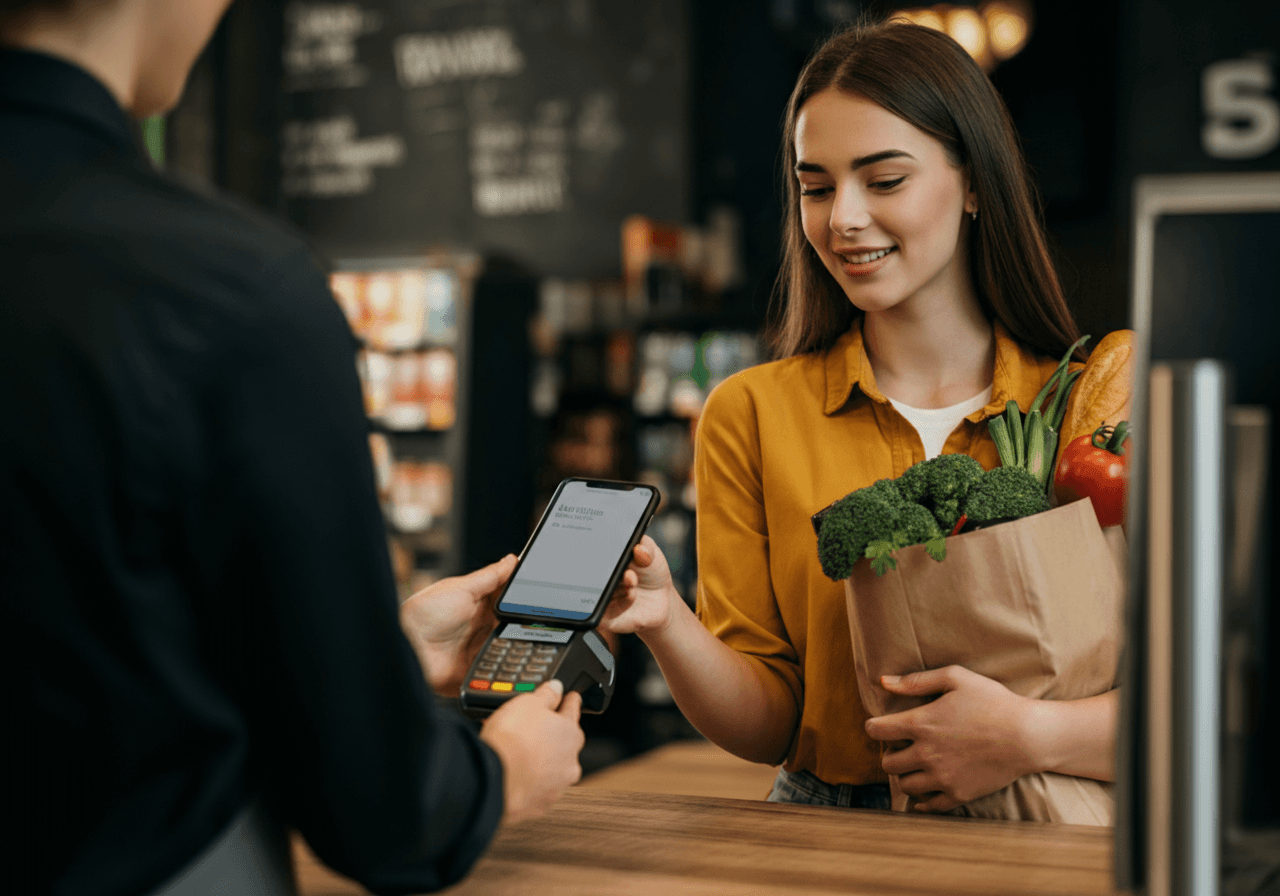
The payment landscape shifted dramatically when contactless technology moved from convenience to necessity. What started as a gradual adoption accelerated rapidly, making contactless payments a critical component of successful merchant operations.
The Contactless Payment Explosion
By early 2020, most merchants were already accepting chip cards or planning to implement them. However, contactless payments truly exploded when public health concerns made touching surfaces a potential hazard. The numbers tell the story:
"By September 2020, for example, Discover® Global Network had experienced a 184 percent increase in contactless spending year to date."¹
This surge reflects a fundamental shift in consumer behavior that shows no signs of reversing.
The Cost of Payment Friction
Merchants without contactless capabilities face real consequences. When customers can't use their preferred payment method, they often abandon purchases entirely.
"A 2020 survey by 451 Research found that 60 percent of consumers said they had abandoned an in-store purchase in the previous six months because the merchant didn't offer their preferred payment method."²
This friction doesn't just cost individual sales—it damages long-term customer relationships. Consumers increasingly seek merchants who provide the payment experience they want.³
Security Remains the Top Priority
While convenience drives adoption, security concerns dominate merchant decision-making:
"69 percent of merchants around the globe said high fraud rates were their top in-store payment challenge, and 49 percent said reducing fraud was their top priority."²
Fortunately, modern contactless solutions address these concerns through EMV-compliant technologies like Discover® D-PAS, providing secure transactions alongside improved customer experience.
Digital Wallets Drive Future Growth
Contactless cards represent just one piece of the puzzle. Digital wallet usage continues expanding, with volume expected to reach 56 percent of total m-commerce spend by 2025.⁴ Modern POS systems typically support multiple contactless options, including:
Contactless payment cards
Apple Pay
Google Pay
Samsung Pay
Preparing for International Customers
Global payment preferences vary significantly, particularly in Asia where mobile wallet adoption far exceeds other regions. China's mobile wallet usage was nearly 2.5 times higher than the global average even before the pandemic.⁵
"When international borders eventually reopen and travel returns to more-normal levels, merchant familiarity with these payment methods will be a huge customer experience factor for these visitors."
Supporting international payment networks like JCB and UnionPay positions merchants to capture this valuable customer segment.
The Technology Is Ready
The encouraging news for merchants is that many modern POS systems already include contactless technology—it simply needs activation. Payment providers and card networks have dedicated resources to help with implementation, making the upgrade process straightforward.
By embracing contactless payments, merchants create a foundation for comprehensive payment acceptance while meeting evolving customer expectations. The question isn't whether to implement contactless technology, but how quickly merchants can activate these capabilities to stay competitive.
Discover Global Network Internal Reporting
451 Research, January 2020. Global Merchant and Consumer Study: In-Store Payment Trends. Viewed 22 July 2021.
451 Research, November 2020. Debit Cards Drive Commerce: 2020 Edition. Merchant and Consumer Insights on Debit Card Usage and Acceptance. Viewed 16th March 2021.
451 Research, January 2021. Key Findings: Global Fintech Vendor and Consumer Study commissioned by Discover Global Network. Viewed 26 July 2021.
451 Research, January 2020. Global Merchant and Consumer Study: In-Store Payment Trends. Viewed 22 July 2021.